

Responsiveness for Google Search results
Google | Interaction Designer | 2024 onwards
What I do
At Google, I lead UX for Responsive Google Search within the Search Design Systems team, shaping the core patterns that define how billions of people experience Search every day. My work spans the foundational elements users see on the results page — everything before they click through..
As one of the most viewed interfaces on the web, Search demands design decisions that are not only elegant but efficient, scalable, and universally clear. Every pixel must balance accessibility, performance, and trust.
I partner closely with Search and AI teams, as well as verticals such as Weather, Flights, Ads, Sports, and Shopping, to ensure a cohesive, inclusive experience across all contexts.
My focus is on designing responsive frameworks, accessible components, and interaction standards that scale seamlessly across devices, regions, and content types.
In this multi-year project, I create and maintain the design logic for how every single component on the page from the search bar to the knowledge panel to the critical ad slots must resize, reflow, and re-stack to comply with WCAG accessibility criteria.
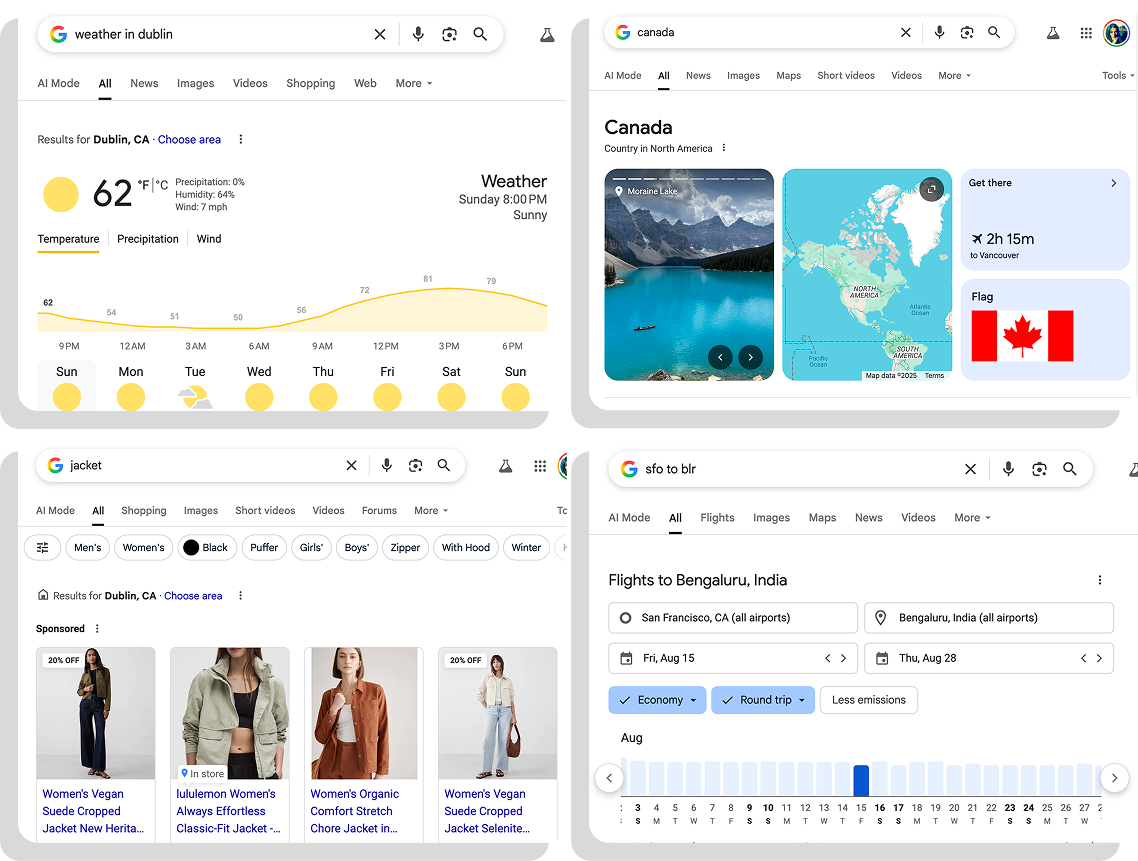
Responsive Desktop Design
Creating a consistent, accessible experience for millions of users across all screen sizes.
Google Search’s web results page was not fully responsive. Over 10% of users on varied screen sizes and densities encountered cropped content modules, disrupting the clarity and reliability of results.
I lead the UX effort to design and implement a responsive framework that scales seamlessly across devices, ensuring that core content remains accessible, performant, and visually consistent. in compliance with WCAG 2.2 accessibility criteria.
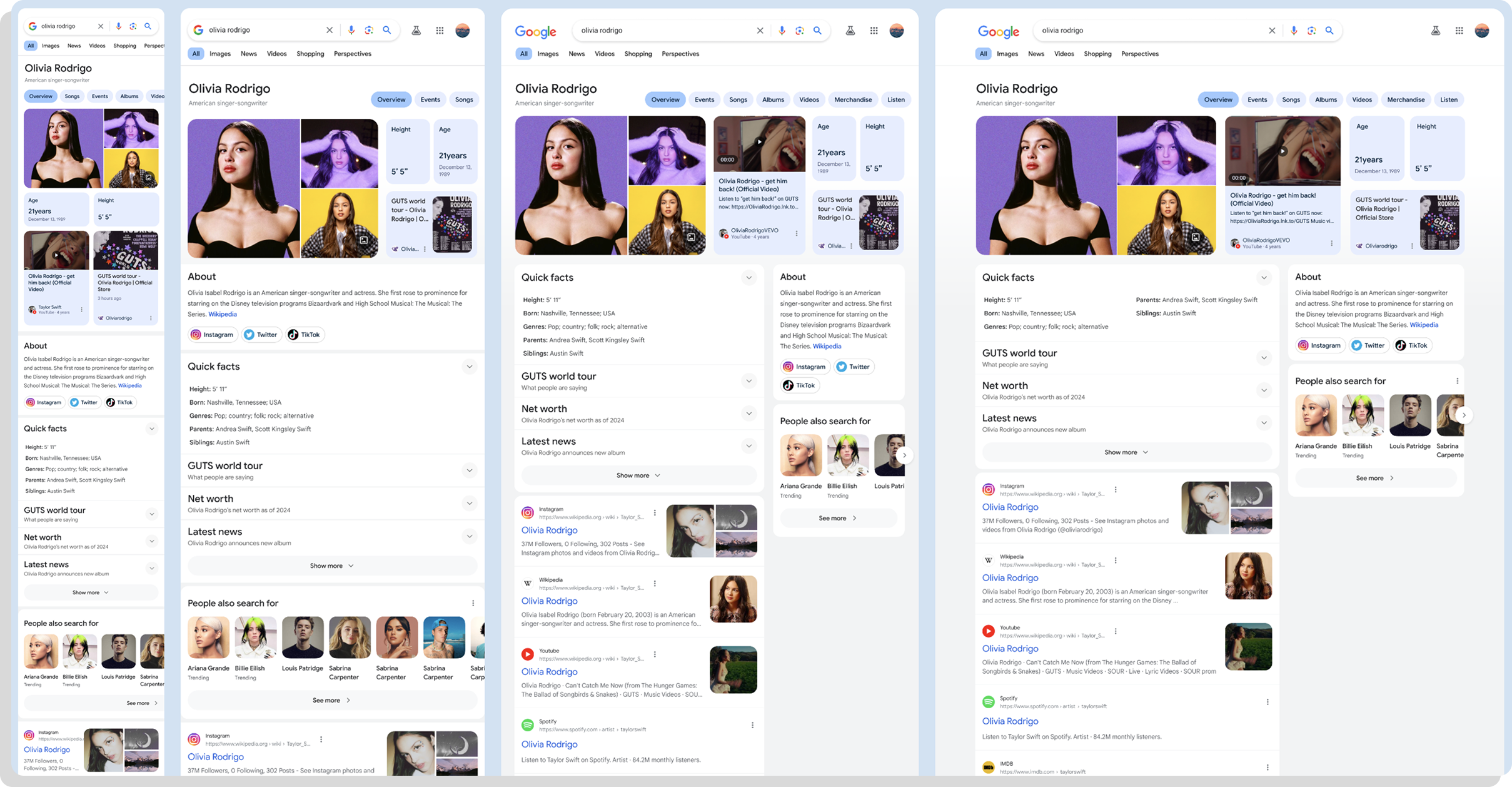
Designs for a wide range of screen densities.My role and approach
In 2025, I took over as the sole lead designer for this multi-year initiative, driving design direction and execution across high-traffic components of the Search results page.
My responsibility is to ensure that Google’s most essential information - from news and shopping to featured snippets, is usable and legible across all browser resolutions.
Redefining how Search responds to different viewport sizes, for all Search modules, including the Search box, AIO, Knowledge Panel, ensuring WCAG accessibility criteria is upheld.
Established internationalization standards, solving for complex scenarios such as right-to-left (RTL) languages, zoom behavior upto 400% magnification.
Partnered closely with engineering to codify breakpoint logic and implementation rules that supported a vast range of screen variations.
Collaborated with product management to define success metrics and validate impact post-launch, confirming that the new layouts improved usability with no performance regressions.
This work redefined how Search scales across devices — transforming fragmented layouts into a unified, responsive system that upholds Google’s commitment to accessibility and clarity at a global scale.
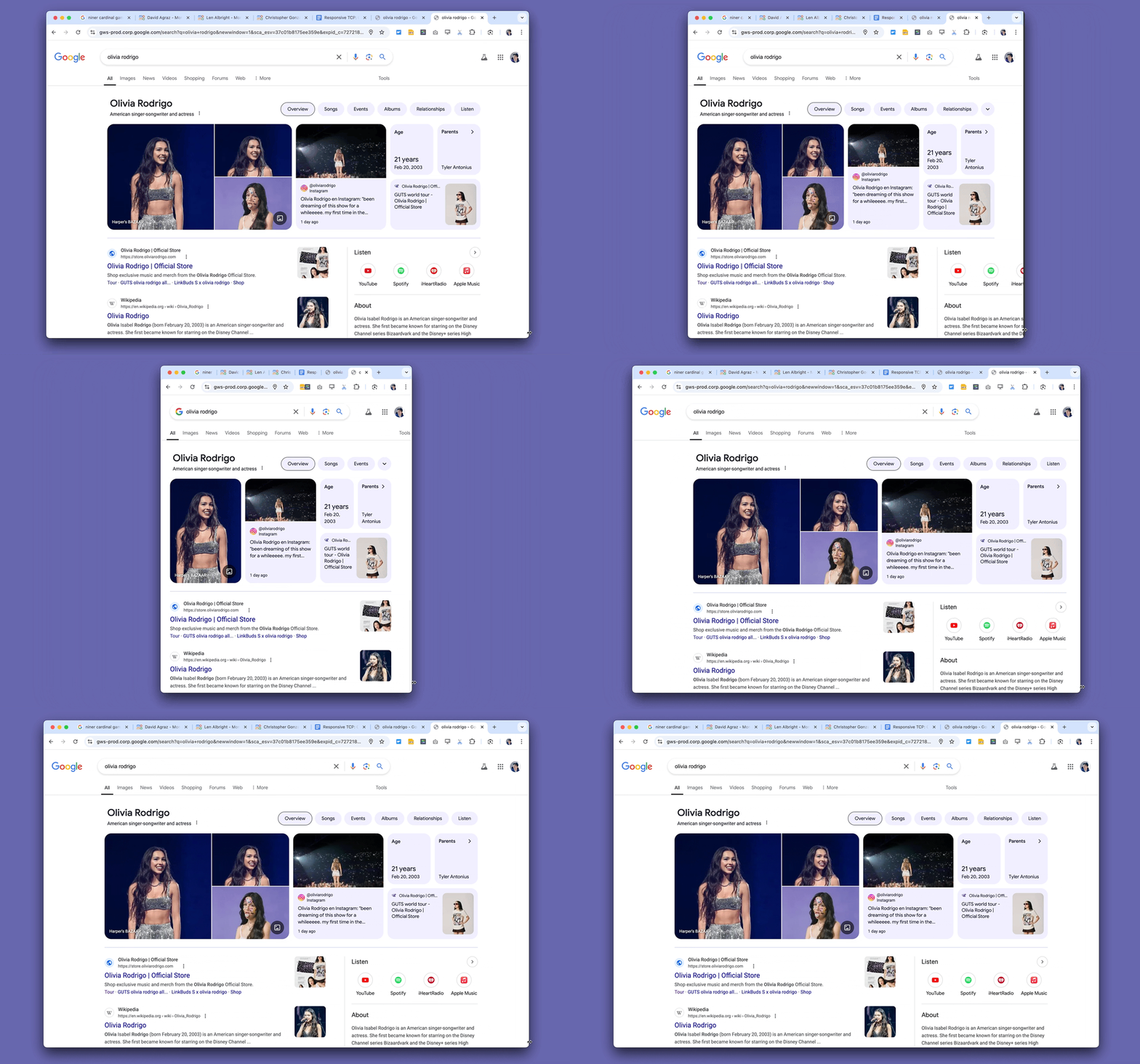
Inclusivity at scale
To strengthen product quality worldwide, I examined Google Search interfaces for accessibility and global usability potential.
My efforts targeted:
Enhancing designs for high magnification.
Securing seamless functionality in international languages.
Streamlining navigation with keyboards.
Addressing these aspects was critical to delivering a more inclusive experience for millions using assistive tools or non-English languages.
Vital accessibility fixes and designing an AI tool to tackle internationalization challenges proactively.
I built and rolled out fundamental accessibility fixes, establishing guidelines for 200% zoom, understanding and designing for unique internationalization needs.
I determined that internationalization challenges, were an opportunity to refine our processes.
To fix this at scale, I pitched an AI-driven tool to automatically detect internationalization layout errors.
I joined forces with engineers to define the model’s results and documented it to fit into our review system.
Designs to ensure inclusive experiences for non-en usersResolve the most pressing issues users encounter.
At the same time, build a scalable solution to keep these problems from recurring.
My approach
I scoped and initiated comprehensive documentation for scalable designs, focusing on spacing, token use, and multilingual edge cases to equip teams in creating resilient layouts from the outset.

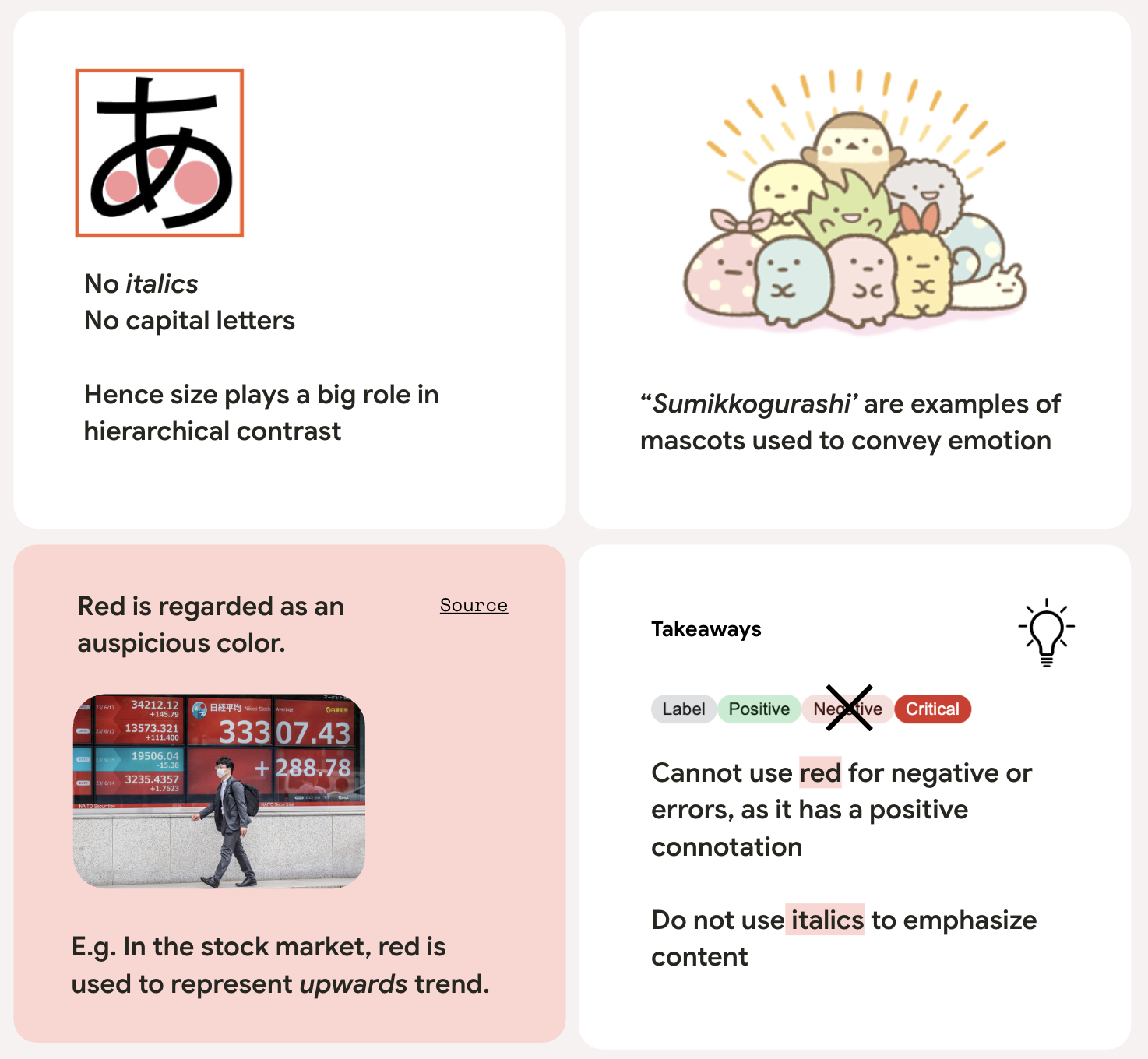
Designing for visually unique text and colors
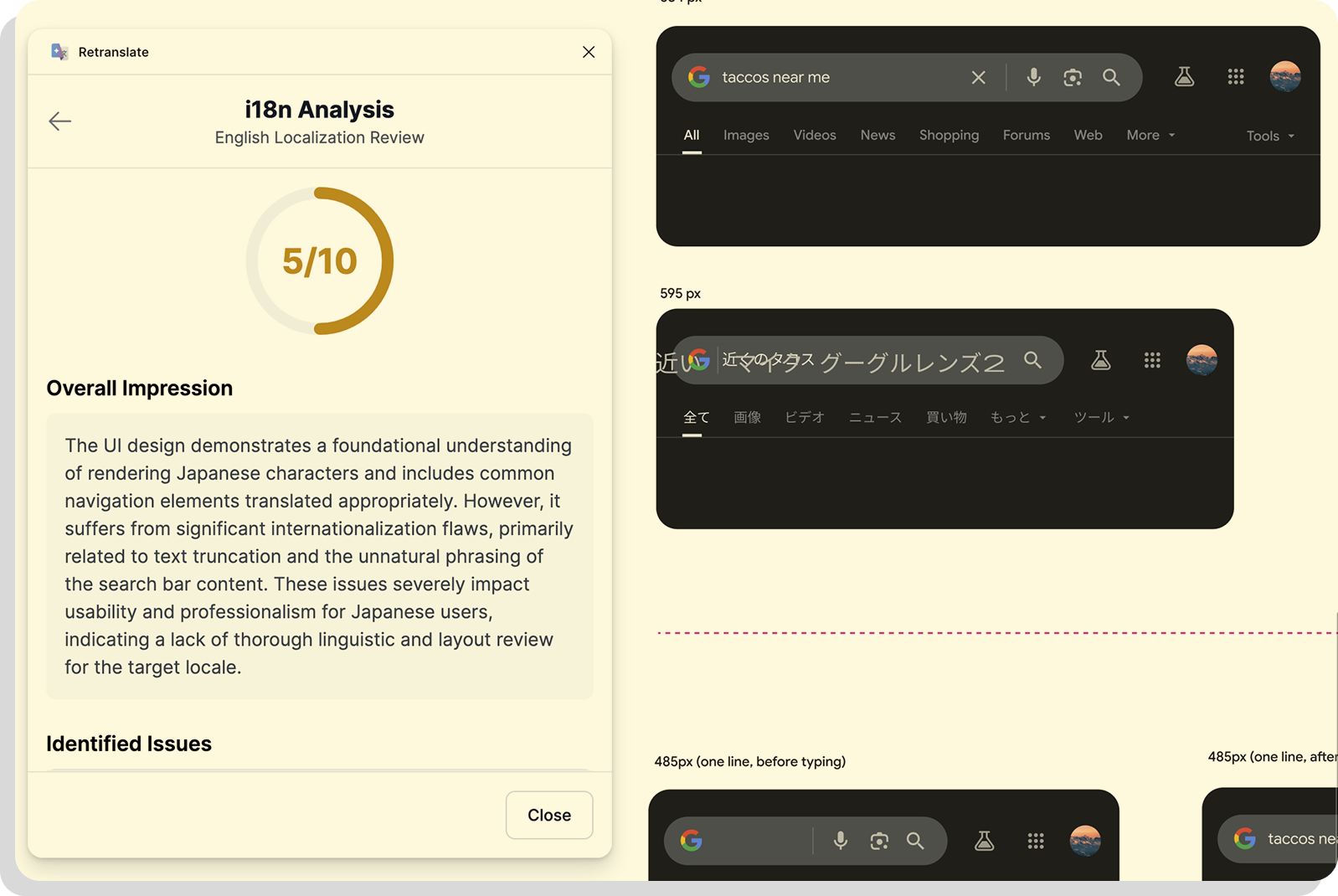
AI tools to identify i18n issues.
Why it mattered

The accessibility updates fixed numerous identified problems, improving usability for those relying on zoom, keyboard navigation, and screen readers.

The AI tool’s pilot phase flagged hundreds of i18n issues before release, demonstrating its value for a larger rollout.

The design patterns I created were integrated into Google Search’s design system, raising the quality benchmark for all future projects.